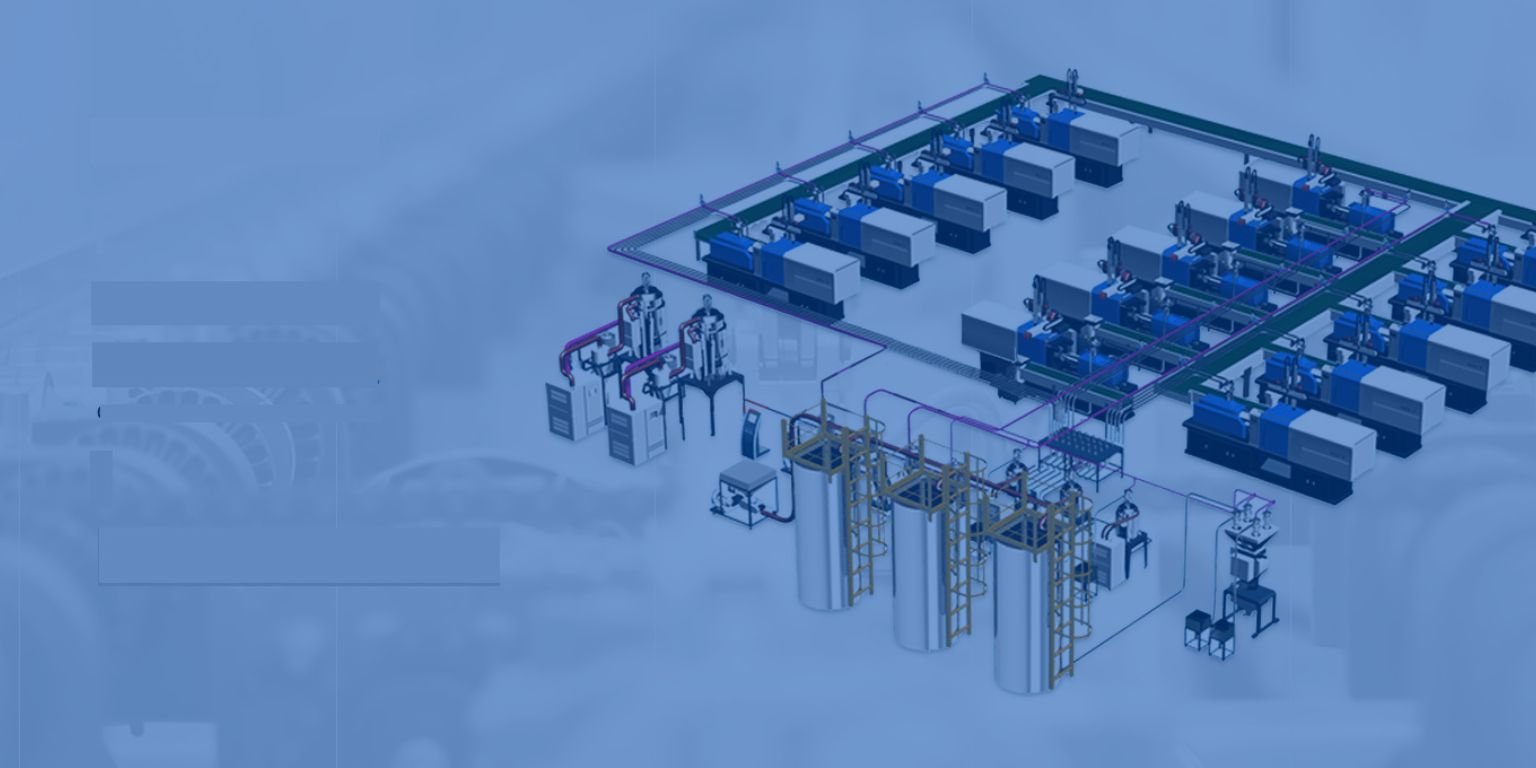
A mould temperature controller (also called a mold temperature controller or MTC) is an industrial heating and cooling unit that circulates water or thermal oil through a mold to hold it at a set temperature during injection molding. By stabilizing mold temperature before and during the cycle, an MTC improves fill quality, surface finish, dimensional accuracy, and cycle consistency. Factories often pair it with an injection molding chiller when they also need dedicated low-temperature cooling after fill.
This page is the canonical guide to mould temperature control for buyers and process engineers: what an MTC does, why it matters, how it differs from a chiller, water-type vs oil-type units, when you need both, and how to select equipment for your plant.
Why Mold Temperature Control Matters in Injection Molding
In injection molding, melt temperature and mold temperature work together. The mold must be warm enough for the melt to flow and pack properly, then cool in a controlled way so the part solidifies with the right properties. Unstable or incorrect mold temperature shows up as:
- Short shots, incomplete fill, or flow-path blockage
- Sink marks, warpage, shrinkage, and residual stress
- Poor gloss, flow marks, or color variation on aesthetic parts
- Dimensional drift and higher scrap rates
- Uneven thermal load that shortens mold life
Stable mold temperature control in injection molding therefore protects four outcomes at once: product quality, cycle time, scrap rate, and mold life. Even temperature distribution across cavities and cores reduces local overheating and the mechanical stress from repeated expansion and contraction.
Which products typically need an MTC?
Not every simple commodity part needs a high-end controller, but many production jobs do. Mould temperature controllers are especially important for:
- Large or high-spec parts — e.g. automotive interiors, appliance housings
- High-temperature plastics — engineering resins that need elevated mold temperatures
- Aesthetic parts — complex shapes, appearance grades, or strict color/gloss requirements
- Thin-wall molding — paper-thin walls that freeze too early without adequate mold heat
- Precision / optical parts — tight tolerances where ±0.1°C control can matter
Exact settings still depend on resin, wall thickness, gating, and quality specs. When in doubt, treat mold temperature as a process variable you control intentionally — not something left to ambient shop conditions.
What a Mould Temperature Controller Does
Before injection, the MTC heats the mold to the target temperature so the melt does not solidify too early in the cavity or runners. During the cycle, it holds that temperature by circulating a heat-transfer medium (water or oil) through cooling channels, often with PID control and a pump, heater, and heat exchanger.
Without adequate pre-heat and hold, shops commonly see incomplete fill, weak weld lines, blocked flow paths, and inconsistent mechanical strength. That is the core reason factories invest in a dedicated mold temperature controller rather than relying only on machine hydraulics or uncontrolled plant water.
Typical MTC features buyers look for include:
- Accurate temperature control (often ±0.1°C on water units; oil units commonly hold within about ±1°C depending on model)
- Fast heat-up and responsive cooling
- Safety protections (over-temperature, phase, pump overload, etc.)
- Single-zone or multi-zone / dual-temperature designs for complex molds
Mould Temperature Controller vs Injection Molding Chiller
Buyers often ask whether they need an MTC, a chiller, or both. The short answer: they solve different parts of the heat balance.
| Role | Mould temperature controller (MTC) | Injection molding chiller |
|---|---|---|
| Main job | Heat and hold mold at process setpoint | Supply low-temperature cooling water |
| Typical medium | Water or thermal oil in a closed loop to the mold | Chilled water via refrigeration circuit |
| Stage focus | Pre-heat + stable hold during fill/pack | Rapid, uniform cooling after fill; also machine/process cooling |
| Outcome | Better fill, finish, and dimensional stability | Shorter cool time, consistent solidification, less overheating |
Why chillers matter after fill
Once the cavity is filled, heat must leave the mold so the part solidifies at a controlled rate. Cooling that is too slow or uneven raises residual stress, warpage risk, and cycle time — especially on large thin-wall parts such as automotive dashboards. An injection molding chiller helps by:
- Delivering consistent cooling for stable quality (less warp, shrink, and stress)
- Shortening cooling time and overall cycle time
- Removing excess heat that can damage or destabilize the molding machine
- Offering adjustable setpoints for different resins and part designs
Air-cooled chillers are easier to install and suit smaller plants or sites with limited cooling-water infrastructure. Water-cooled chillers (often with a cooling tower) are typically more efficient for continuous, large-scale production. See Yushine’s industrial chiller range for air-cooled, water-cooled, and screw options.
When you need both an MTC and a chiller
Many factories run both:
- The MTC keeps the mold at the molding temperature required for fill and surface quality.
- The chiller (and sometimes a cooling tower / plant water system) provides the cold source for mold cooling channels, MTC heat exchangers, or hydraulic oil cooling.
You typically need the combination when:
- Cycle time is limited by cooling, not by fill
- Parts are thick-walled or large and dump a lot of heat
- You run continuous multi-shift production and need stable long-term cooling capacity
- Different mold zones need different temperature curves (multiple MTCs plus central chilled water)
For light-duty or low-requirement jobs, a single MTC or a simpler cooling-tower loop may be enough. For high-precision or high-volume lines, an integrated temperature control system (MTC + chiller ± cooling tower) is the usual professional setup.
Water-Type MTC vs Oil-Type MTC
The heat-transfer medium defines the practical temperature range and response of the unit.
Water-type mould temperature controller
- Best for: mold temperatures roughly up to 120°C on standard water units; high-temperature water designs can go higher (often toward 160–180°C with pressurized systems, depending on model)
- Strengths: fast heating and cooling, high heat-transfer efficiency, lower running cost, no thermal-oil handling, good for general-purpose and many precision jobs
- Typical use: commodity and engineering plastics that do not need very high mold temperatures
Explore Yushine water temperature controllers.
Oil-type mould temperature controller
- Best for: higher mold temperatures, commonly up to 200°C standard and 300°C on high-temperature oil models
- Strengths: stable high-temperature control for demanding resins and processes; indirect cooling keeps oil and plant water separate
- Typical use: high-temperature engineering plastics, die casting / rubber / composite-related heating needs, and molds that must stay hot and stable
Explore Yushine oil mold temperature controllers.
Rule of thumb: choose water when your process window fits water’s range and you want speed and efficiency; choose oil when the mold setpoint exceeds what water can safely and reliably deliver.
Other Equipment Used for Mold Temperature Control
Besides MTCs and chillers, plants may also use:
- Cooling tower + circulating water — economical plant water for less critical temperature needs or centralized supply; performance depends more on ambient conditions
- Heating elements — cartridge heaters, plates, or bands for hot runners and local zones; fast local heat but weaker whole-mold uniformity alone
- Integrated systems — coordinated MTC + chiller + tower for rapid heat-up, stable hold, and effective cool-down on high-end lines
How to Choose the Right Mold Temperature Control Equipment
1. Start from mold temperature requirements
- ≤ ~120°C: water-type MTC is usually the first choice
- Medium to high temperatures (toward 300°C): oil-type MTC
- Cooling-dominated jobs: size a chiller or cooling-tower system for heat load and cycle targets
2. Match product and quality level
- Precision / optical parts → prioritize control accuracy and channel design
- Thick-wall or large parts → plan enough cooling capacity so cool time does not dominate scrap and warp
- Hot-runner molds → combine MTC with proper hot-runner heating and local control
3. Match production scale
- Small batch / trial: one correctly sized MTC may be enough
- Continuous multi-machine production: MTC + chiller (or central chilled water) for long-term stability
- Centralized factories: cooling tower / circulating water for plant loops, with MTCs at the mold
4. Factor energy and plant conditions
Modern MTCs often use efficient heaters and variable-frequency pumps to cut energy use. Closed-loop cooling reduces water waste where environmental rules are strict. Also check ambient temperature, water quality, available floor space, and whether air-cooled or water-cooled chillers fit your region and utility setup.
FAQ: Mould Temperature Controllers & Chillers
What is a mould temperature controller in simple terms?
It is a pump-and-heater (and cooler) unit that circulates water or oil through the mold so the mold stays at a chosen temperature during injection molding.
Is “mold temperature controller” the same as “mould temperature controller”?
Yes. Mold is the common US spelling; mould is common in UK and many international B2B markets. Both refer to the same equipment class (MTC).
Do I need a chiller if I already have an MTC?
Often yes for production molding. The MTC holds mold temperature; the chiller provides the cold water needed for efficient heat removal and shorter cycles. Many MTC cooling exchangers also rely on a chilled or plant-water source.
Water-type or oil-type MTC — which should I buy?
Choose water for most applications within the water temperature range (faster response, lower media cost). Choose oil when the required mold temperature is higher than water systems can safely deliver.
Can one temperature setting work for every product on the same machine?
No. Even with the same press and resin family, different part designs need different mold temperature profiles. Some molds need multiple zones or multiple controllers.
Talk to Yushine
Yushine (Dongguan) supplies plastic auxiliary equipment for injection molding factories, including water-type and oil-type mould temperature controllers, industrial chillers, cooling towers, and related heating options. If you are sizing an MTC, pairing chillers with molds, or upgrading from uncontrolled plant water to closed-loop temperature control, our team can help match capacity, medium (water/oil), and layout to your resins and cycle targets.
- Browse industrial chillers
- See water temperature controllers and oil MTCs
- Visit the Yushine homepage or contact sales for a process-based recommendation
Contact: +86 159 2020 9741 · sales@yushineplastics.com
Address: South No.1, Lane 5, FenXi Road 3, LiuYongWei, WanJiang District, Dongguan City