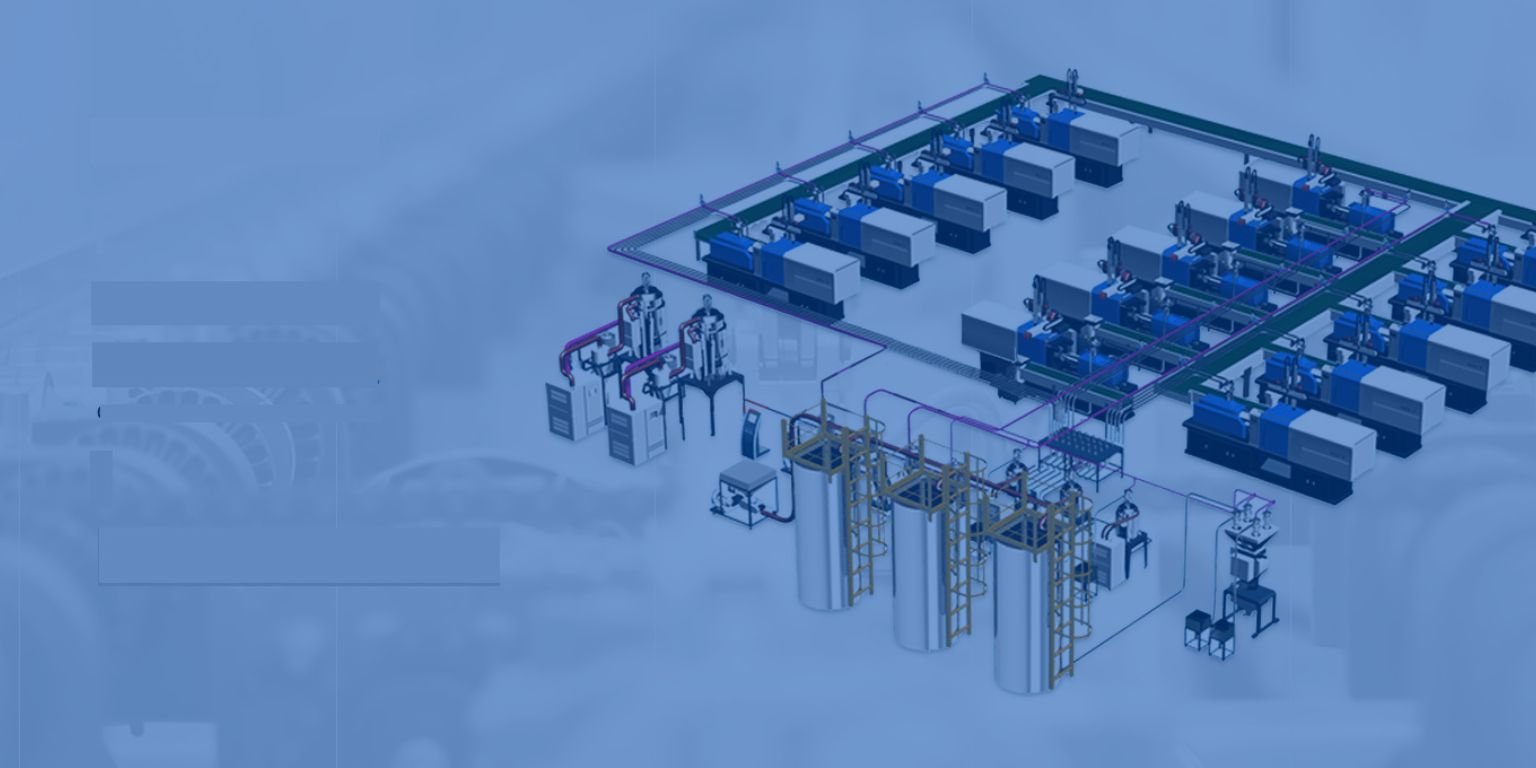
In the plastics industry, the precision of temperature control affects product quality; for example, during the plastic molding process, slight fluctuations in mold temperature may cause dimensional error or appearance defects of the product. Precise control of mold temperature via mold temperature controllers can be considered an advanced temperature regulation technique suitable for providing high-quality and reliable end products during manufacturing. In the following text, some frequently asked questions will be answered.
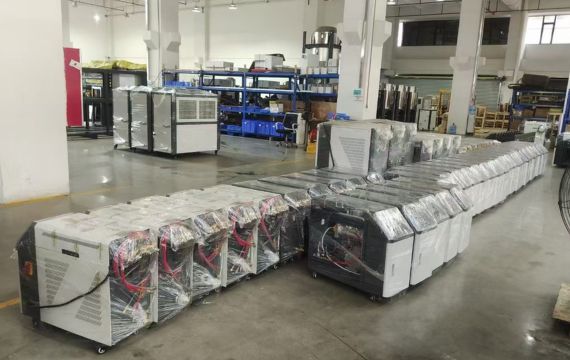
1. The Definition and Working Principle of Mold Temperature Controller
1.1 What is the Mold Temperature Controller?
As a temperature control device equipped with heating and cooling functions, this dual-function equipment is integral to achieving optimal thermal conditions throughout molding. Its primary purpose is to heat, calm, and maintain a constant temperature of molds during production. It is widely used in injection molding, metal die-casting, chemical reactors, bonding, kneading, and other industries. It consists of a water storage tank, heating and cooling unit, circulation pump, transfer pipes, temperature controller, injection port, etc. It adjusts the temperature to avoid defects caused by temperature fluctuations and ensures the stable quality of the product.
1.2 How does the Mold Temperature Controller run?
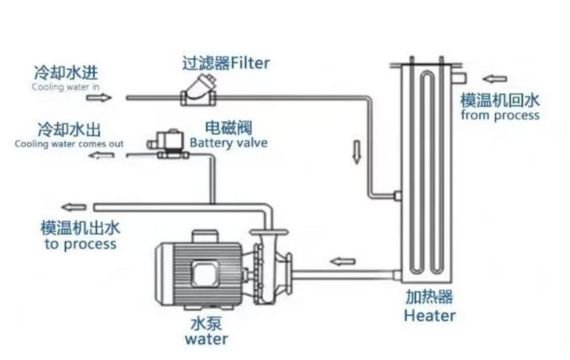
Mold temperature controllers provide precise control and temperature maintenance using thermal media such as water or thermal oil, which is heated or cooled depending on the needs. When a heating operation is required, the circulation pump pumps the circulating medium from the water tank to the heating unit. After reaching the target temperature, the medium is transmitted to the mold to heat the mold. When cooling is required, or mold temperature exceeds the predetermined set point, the controller deactivates the heating mechanism and initiates the cooling system. There are two primary forms of cooling: direct cooling and indirect cooling. In indirect cooling, a cooling loop is separated from the main loop. The medium is cooled by exchanging heat with the cooling water in the plate heat exchanger, after which it flows back to the mold. In direct cooling, the water is directly injected into the mold for cooling. Through this circulation process, the mold temperature controller can precisely regulate the mold’s temperature, improving the quality of the molded parts and enhancing production efficiency.
2. Types of Mold Temperature Controllers
According to different use needs and working environments, mold temperature controllers can be divided into several types. The classification primarily depends on the circulating medium used, with water-based and oil-based systems being the two main categories. When the temperature required by the processing process is higher, the high-temperature mold temperature controller is more suitable. A two-stage mold temperature controller can be used if the functional requirements are more complex and stage temperature control is needed. Of course, there are more types of mold temperature controllers with different functions, some functional differences, and diverse usage scenarios. Next, we will introduce the four frequently used and excellent mold temperature controllers mentioned above.
2.1 Water-Type Mold Temperature Controller
Water-based mold temperature controllers employ water as the primary circulating medium for thermal regulation and, in general, use direct cooling methods. Their temperature is controlled within the range of 40°C to 120°C, and they show outstanding heat transfer and environmental protection performance. They are efficient, fast to heat, safe, and economical. In certain situations that require rapid temperature changes or maintaining a constant temperature, water-type mold temperature controllers are better than oil ones.
2.2 Oil-Type Mold Temperature Controller
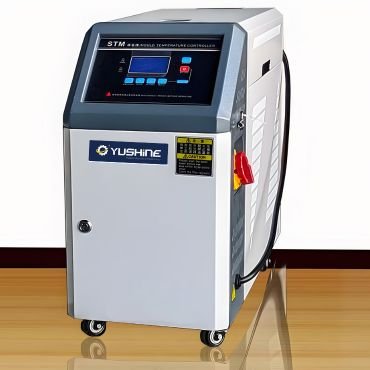
As its name implies, using thermal oil as the circulating medium is an oil-type mold temperature controller. Oil mold temperature controllers use indirect cooling. Because thermal oil has a high boiling point and is not easily decomposed at high temperatures, the oil mold temperature controller has a maximum working temperature of up to 200°C and can be used for high-temperature forming processes or in some particular situations where it is necessary to work stably for a long time.
2.3 High-Temperature Mold Temperature Controller
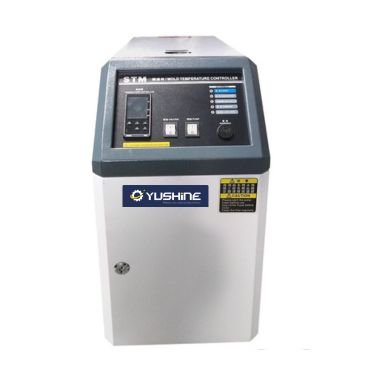
High-temperature mold temperature controllers are specifically designed to meet the demands of molding processes that require elevated temperatures. They are available in two main types: water-based and oil-based systems. To satisfy some special requirements of high temperature, some products are equipped with a magnetic pump(water-type high-temperature mold temperature controller can reach a working temperature of 200°C, oil type can get a working temperature of 350°C). The advent of high-temperature mold temperature controllers has overcome the temperature limitations of standard models, broadening their range of applications, and they are suitable for factories processing unique materials or requiring high temperatures.
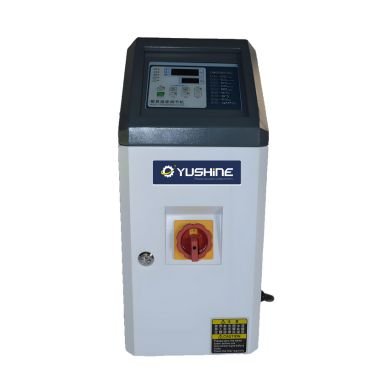
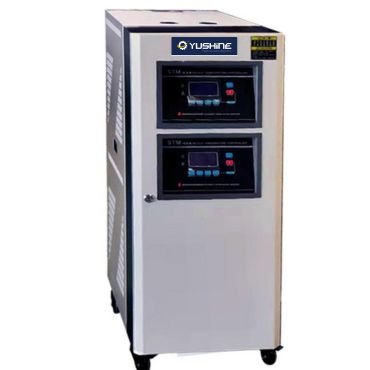
2.4 Dual-Stage Mold Temperature Controller
Also called a dual machine, a dual-stage mold temperature controller combines two independent heating, cooling, and control designs. Two, machines separately control the temperature, realizing sectional temperature control(for example, if the upper and lower mold energies need differences, the device can meet the demand), reducing the molding cycle and improving production efficiency. It saves space and uses power consumption, making it suitable for complex processes requiring mold temperature control.
3. What to Consider When Purchasing a Mold Temperature Controller?
3.1 Temperature Requirements and Precision
The precision of temperature control directly affects product quality. The optimal temperature range and control accuracy vary depending on the material properties, manufacturing processes, and product dimensions. When selecting a mold temperature controller, it’s advisable to prioritize models that offer high-precision temperatures in the specific temperature range required for your production needs. While initial costs may be higher for more precise systems, the long-term benefits of product quality and reduced waste often justify the investment.
3.2 Heat Transfer Medium
Water-based and oil-based mold temperature control systems are efficient but have different applications. Economical and eco-friendly water controllers are typically used in medium-temperature applications. They are efficiently cooled and low-maintenance, and thus, they are used in several ordinary molding operations. On the other hand, oil-based systems are used in high-temperature applications. They are more stable and accurate in high temperatures, essential for specialized molding processes.
3.3 Ease of Operation
When selecting a mold temperature controller, the ease of operation, user-friendliness, serviceability, and advanced options should be considered. In terms of usefulness, a user-friendly interface increases productivity while decreasing the likelihood of user error. These features simplify production and allow for a broader range of operations.
3.4 Heating and Cooling Capacity
Select a mold temperature controller with adequate heating and cooling capacities for quick response time and stable temperatures for faster heating or cooling.
3.5 Safety features
Present-day mold temperature controllers benefit significantly from integrating safety features and mechanisms into comprehensive fault detection systems. Understanding such controllers entails the knowledge that these devices should have several protective elements, such as overheating and pressure, as well as several fault indications. These safeguard devices will come in handy when it comes to preventing the destruction of machines, interruption of production cycles, and protecting the well-being of the operators.
4 Which Industries Use Mold Temperature Controllers?
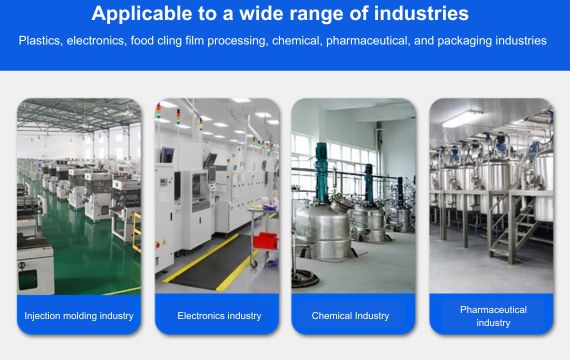
Mold temperature controllers are used in many industries, such as automotive, aerospace, and medical device manufacturing.
4.1 Automotive Manufacturing
The production of car parts is justified by the requirement of precise temperature control throughout various phases of its manufacturing, especially when it comes to plastic elements, such as dashboards, door panels, bumpers, and many others. The temperature stability during the molding cycle is central to meeting predetermined tolerances for these components of vehicle construction. First, correct mold temperature adjustment performs several essential functions: accuracy of shape, better surface quality, and more effective control of expansion induced by temperature changes. In addition to plastic parts and light guide components, mold temperature controllers have also been employed in producing automobile glass. Thus, cooling progression in a controlled fashion is essential for developing appropriate strength for the glass and conserving a reasonable range of optical properties. Such detailed control of temperature aims to produce all the pieces within the parameters set out for safety and quality. It expands the usage of these controllers in automotive manufacturing.
4.2 Aerospace
In manufacturing aircraft components, the curing phase of composite components requires particular attention to the temperature to conform to the end material properties. The correct mold temperature controllers are selected to deliver the heat precisely operating temperatures so that every component meets aerospace standards with the enzyme design specifications. e to proper temperature management during the curing process, the manufacturers can routinely realize the superior properties and exacting tolerances that aerospace applications necessitate.
4.3 Medical device manufacturing
The accuracy and the quality of medical devices, incredibly disposable medical supplies such as syringes and infusion sets, deserve a lot of emphasis to maintain the precision and the quality of medical devices; plastic components such as syringes and infusion sets have to comply with mold temperature controllers so that they can be produced in solid plastic which is standard in the industry.
5. How to Maintain a Mold Temperature Controller?
It’s crucial to routinely inspect and adjust the temperature controller for optimal performance and functioning. F-ters should also be examined for possible blockages and replaced or cleaned.
5.2 Cleaning
To maintain desired performance parameters, the internal and external surfaces of the mold temperature controller must be regularly cleaned. Using compressed air or soft brushes to remove dust and debris is an effective practice to avoid clogs in the circulation system and maintain the required heat exchange efficiency.
5.3 Anti-corrosion and lubrication
To help lengthen the useful life of the equipment, measures like applying anti-corrosive cover over parts that are likely to rust and proper lubricants on parts to avoid frictional damage should be followed. Such measures assist in maintaining the strength and dependability of the equipment throughout the years.
5.4 Electronic components
Ensure the temperature control system is periodically calibrated to maintain accuracy. Regularly checking the temperature control circuits and other electronic components can avoid damage or failure, ensuring dependable operation.
5.5 Safety considerations
To avoid electrical shocks, make sure that the equipment is well grounded. Avoid placing the unit close to heat-generating objects and use heatproof connecting devices. The operators must take special precautions and follow the safety standard operating procedures for operating mold temperature controllers to prevent incidents and accidents arising from improper and unauthorized actions.
Mold temperature controllers are critical in not just assuring the quality of the product but also improving production efficiency while cutting costs in the process. In the selection process, howeveprocessesparameters must be considered to ascertain that it requires processing specifics. When the prototype is selected, manufacturers are assured of a dependable basis for cost-effectively producing high-quality plastic products, which is a plus in terms of competitiveness in the market.