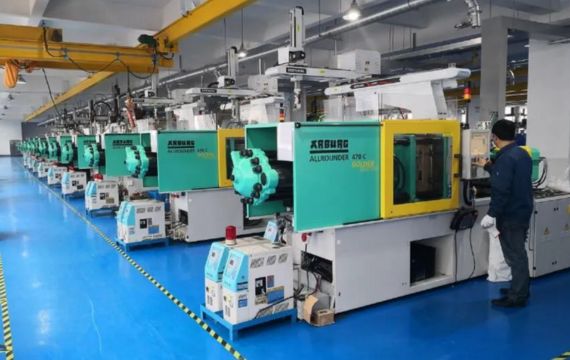
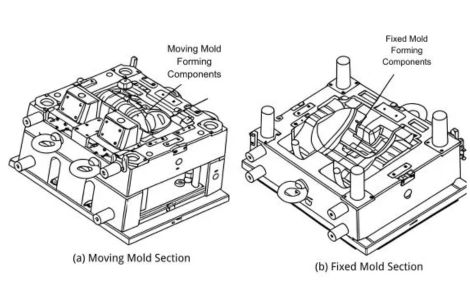
There are three standard plastic molding techniques: injection molding, blow molding, and extrusion molding. I want to expand on these three techniques from the following points to deepen the content.
1. Advantages and Disadvantages of Each Method
Injection Molding advantages :
High productivity and great speed of production. Precise control is possible in manufacturing complex shapes. If produced in large quantities, the cost per unit is low.
Disadvantages of Injection Molding :
Molds require high initial setup costs, and mold manufacturing often takes a long time. It is not economically feasible for small batches of production.
Blow molding advantages:
Suitable for making hollow forms like bottles. Economical for large-scale production.
Disadvantages of blowing:
Limited shapes and sizes are possible. Wall thickness uniformity issues. Extrusion Molding: Advantages: Lengthy articles’ inefficiencies provide a continuous production system. Best for making shapes with similar cross sections. Disadvantages: Comparatively much simpler design than injection molding. Warping may occur during cooling.
Extrusion Molding Advantages:
There is low technological waste and low production costs, and continuous or mass production is possible. The production rate is beneficial for long and slender components. The uniformity of the cross-sections is good despite the variations in length and cavity of the part.
Disadvantages of extrusion:
Limitations in the design of product components are evident, exerting pressure on manufacturing processes. Problems of warpage on cooling are anticipated.
2. Types of Materials Commonly Used
Injection Molding:
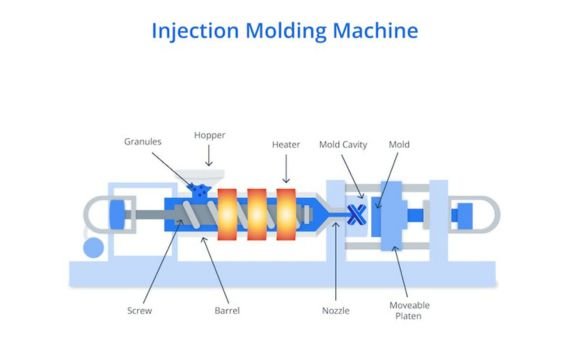
This process generally employs thermoplastics like ABS, polycarbonate, and polystyrene, but some thermosets can also be employed.
Blow Molding:
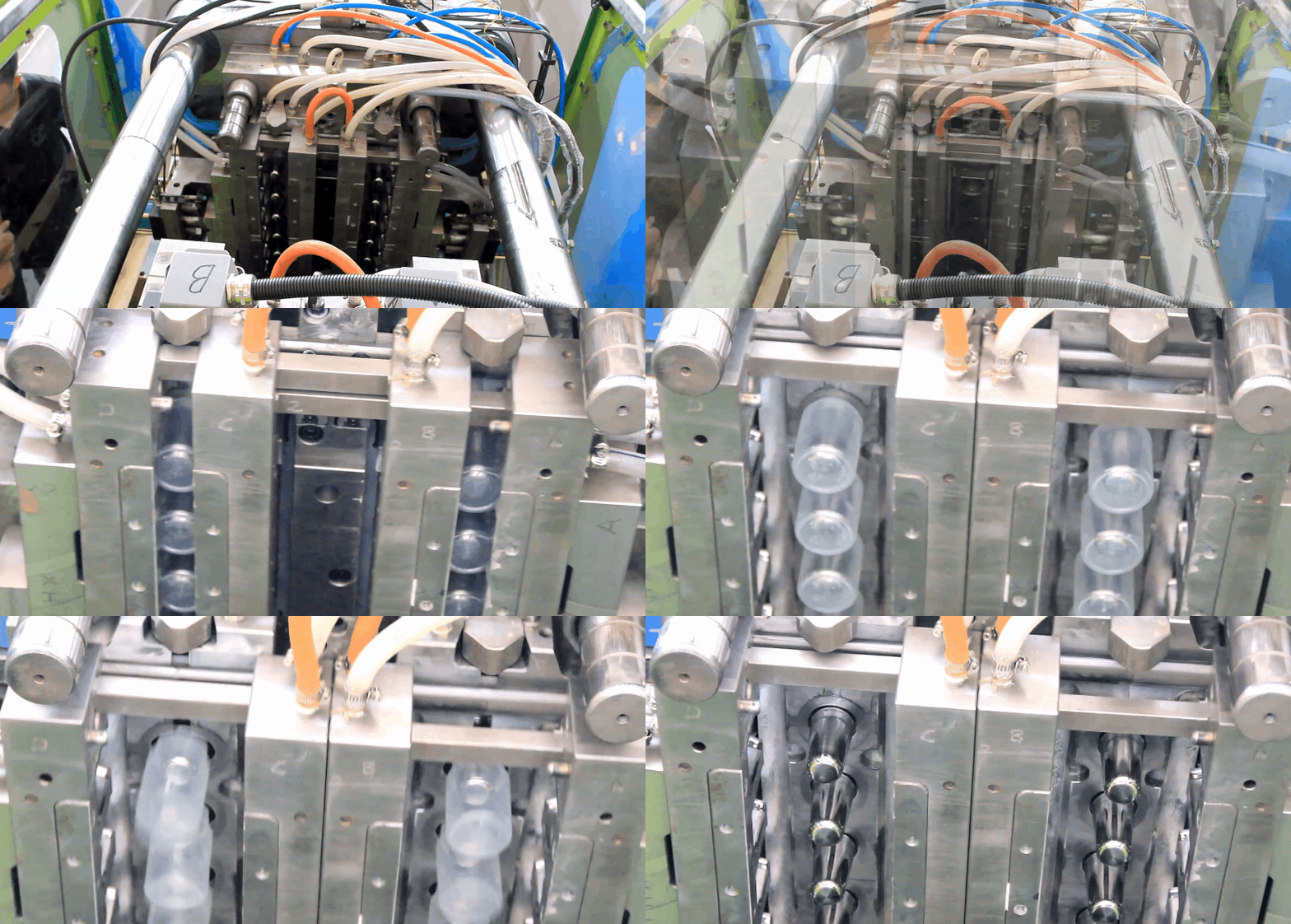
It primarily uses hard thermoplastics like polyethylene (PE) or polypropylene (PP), which are best suited for making light but strong containers.
Extrusion Molding:
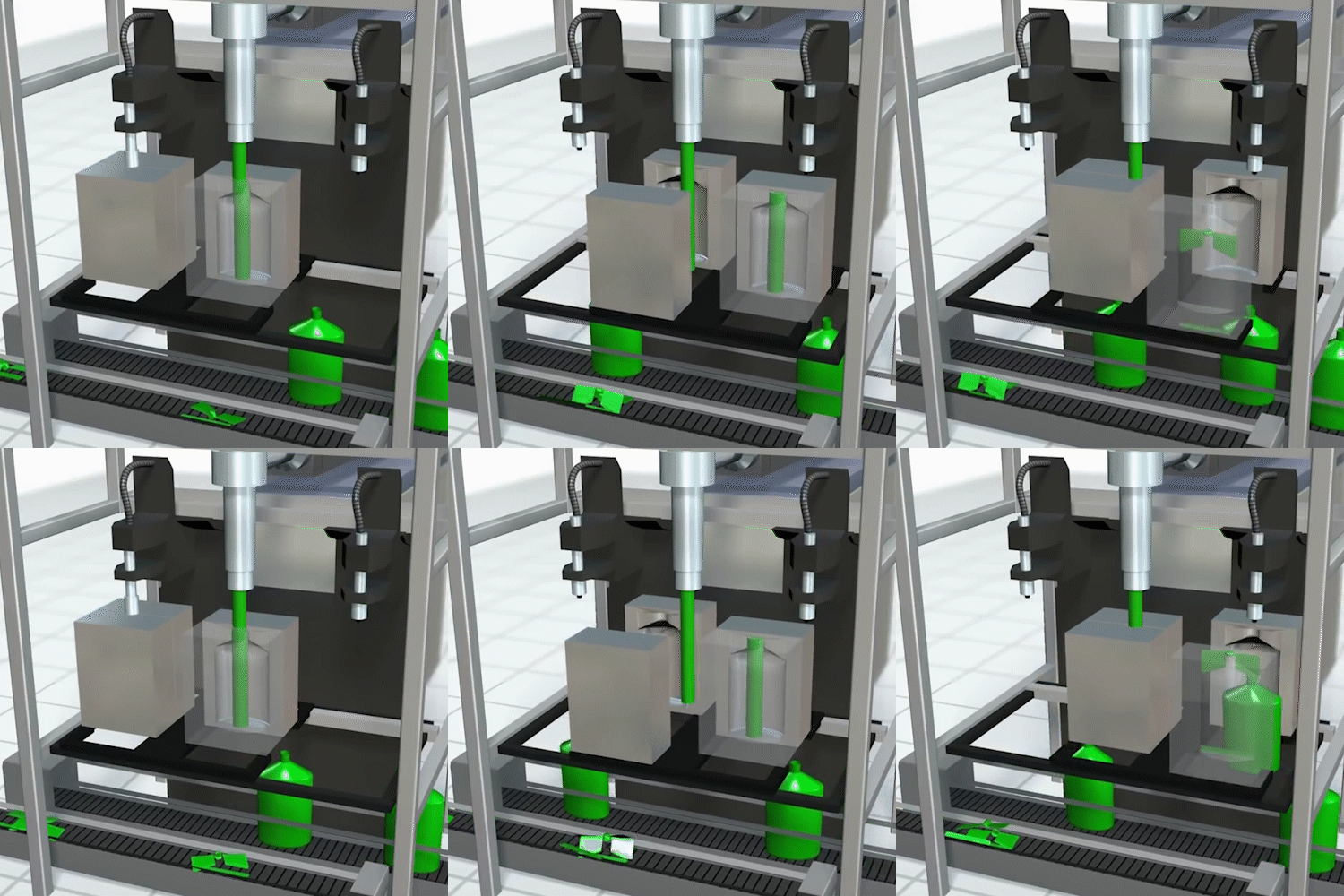
It also uses thermoplastics, often PVC, polystyrene, and polyethylene. This method can also be applied to some thermosets.
The material selected affects the manufacturing processes, final product applications, and their properties.
3. Real-world examples of Products Made Using These Techniques
Injection molding:
This method helps mass produce items such as trash bins, kitchenware, or electronic device housings because it quickly produces products with intricate details.
Blow molding:
This method is used to make bottles for soft drinks, some containers for household chemicals, and large body tanks for industries.
Extrusion Molding:
Because of the very nature of extrusion, which allows for consistent long lengths of materials to be produced, pipes for plumbing, etc., plastic sheets and other forms of packing materials are predominantly made using extrusion molding.
4. Additional Considerations
To appreciate these molding processes better, we can look at:
Equipment and Tooling Requirements:
The equipment required differs considerably from the three processes.
Production Speed and Efficiency:
Every method has specific operation rates that affect overall productivity.
Cost Considerations:
Costs can be analyzed considering production capacity to assist manufacturers in selecting the most appropriate method.
Quality Control Measures:
All three processes need to incorporate measures to ascertain the quality of the finished products, and we are able to focus on industry norms.
Environmental Impact and Sustainability:
In this section, I will describe how each method affects the surrounding environment and what eco-friendly alternatives are used.
Recent Technological Advancements:
Improvements are possible in any method to cut down costs or time spent.
Looking into these factors allows us to better understand the place of these molding processes in plastic manufacturing.
5. Auxiliary Equipment in the Plastics Industry
Most people know about machines in the plastics industry, such as injection and blow molding. However, auxiliary equipment is just as important. These machines, such as dryers and chillers, support the production process and help ensure high-quality results.
We will now focus on some of the auxiliary equipment widely utilized in injection, blow, and extrusion molding:
1. Chillers
- Cool molds and products in all three molding processes
- Injection molding: Speed up plastic setting, reducing cycle time
- Blow molding: Shape the plastic by cooling molds and blown products
- Extrusion molding: Prevent warping in extruded items
2. Dryers
Remove moisture from plastic resins before molding
- Injection molding: Prevent defects like splay or bubbles
- Blow molding: Avoid weak spots or holes in products
- Extrusion molding: Ensure proper material flow and surface quality
3.Mold Temperature Controllers
- Maintain optimal mold temperatures
- Injection molding: Control cooling and reduce warpage
- Blow molding: Manage wall thickness and surface finish
Extrusion molding: Maintain consistent extrusion
4. Blenders/Mixers
- Prepare plastic resins for molding
- Injection molding: Ensure even distribution of additives and colors
- Blow molding: Mix virgin and recycled resins
- Extrusion molding: Maintain consistent material properties