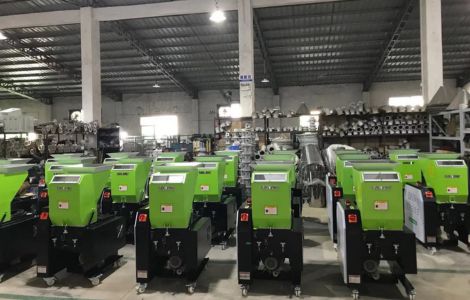
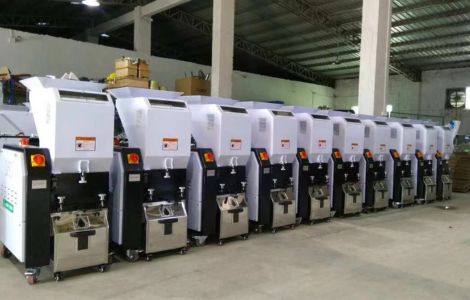
When selecting between a shredder, grinder, and granulator, it is crucial to consider the specific application and desired output. Although the terms are often used interchangeably, they may have slight differences in design and performance depending on the manufacturer.
Shredders, grinders, and granulators are all size-reduction machines used in plastic processing and recycling, but they have distinct characteristics and applications:
What is the purpose of the shredder?
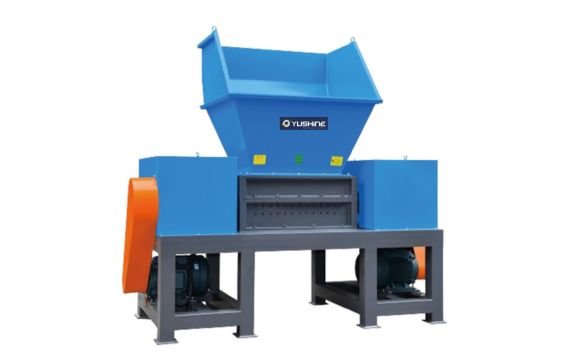
It operates at a low speed (3.6-83 rpm) with high torque. Designed for primary size reduction of large, bulky materials, it can handle various materials, including plastics, wood, tires, metal, rubber, etc. Producing randomly sized output, typically 20-100mm pieces, is ideal for processing heavy, dense materials like purgings. It is often used as the first step in a multi-stage size reduction process.
Shredders come in single-shaft and dual-shaft configurations. Their simple, heavy-duty structure makes them ideal for shredding and washing most waste plastics and large, thick materials. Shredders can quickly break down bulky items with sharp, durable blades that require minimal maintenance. However, the shredded pieces are often too large and may require secondary grinding.
What are Grinder’s and Granulator’s characteristics?
It’s important to note that the”terms “ride” and “gra” emulator” are often used interchangeably in the industry, which can lead to some confusion. However, there are some distinctions:
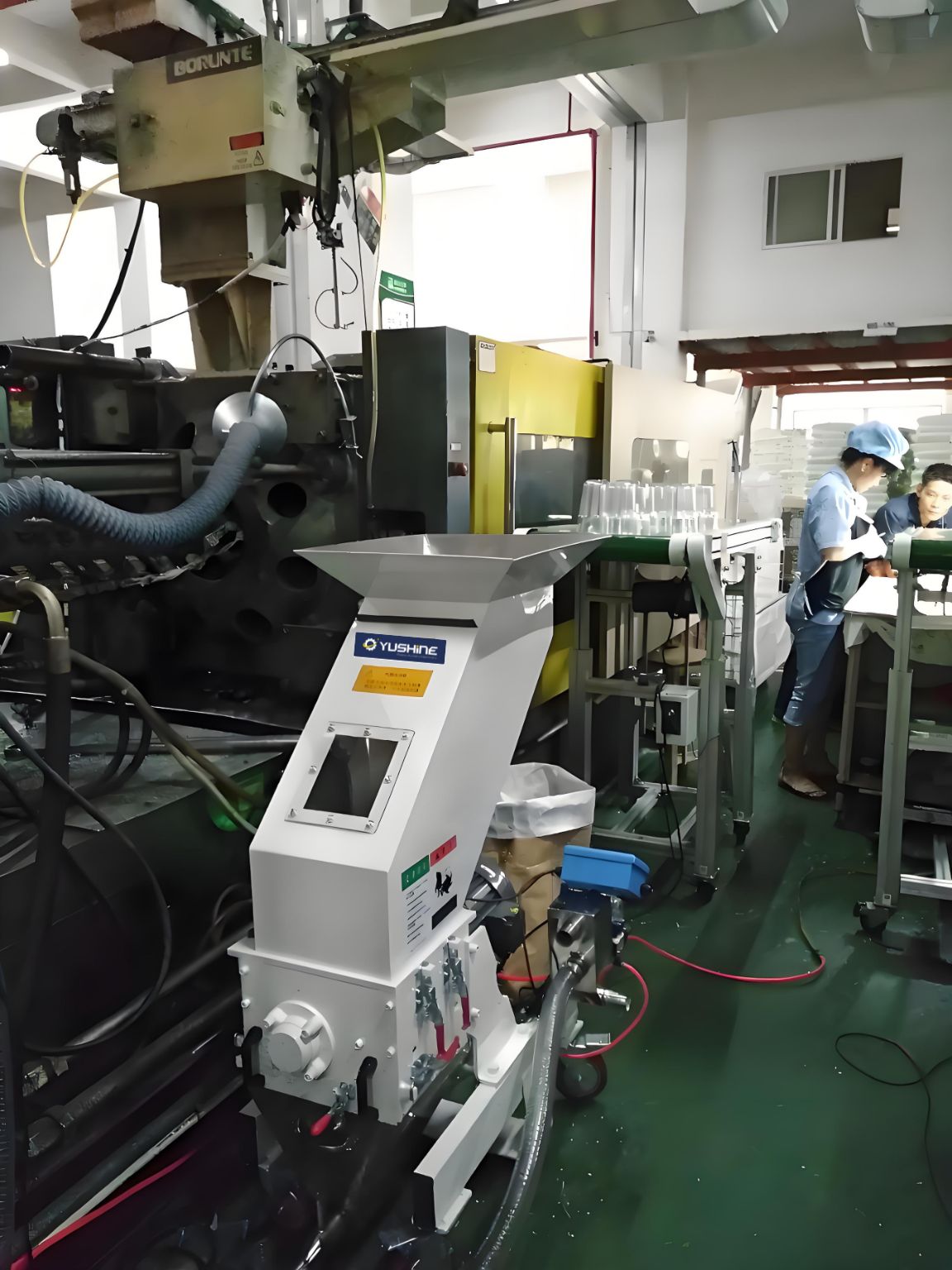
1. The Grinder features
The grinder operates at higher speeds than shredders but lower than granulators. It has a closed-rotor design. It can reduce materials to smaller sizes than shredders but is less refined than granulators. However, it is more cost-effective than granulators for many applications and is Suitable for processing a variety of plastic scrap.
Granulator’slator’s key features
Operate at high speeds (415-1460 rpm) with relatively low torque, Have an open rotor design, Produces the most petite particle sizes, often 6-12mm or less, Can create uniform, consistently sized granules, Best suited for lighter materials and smaller plastic parts and frequently used for beside-the-machine recycling of sprues, runners, and edge trim. It can be used as a secondary size reduction step after shredding; the plastic grinders produced by some manufacturers can grind common thin plastics with high efficiency, producing small flakes in a single pass. While they may have more worn parts requiring occasional blade sharpening or replacemencompany’smpany’s granulators adopt durable SKD11 steel for the blades, so they could defectively enlarger blades’ life span.
What are the critical applications for each type of size reduction equipment?
Shredders:
- Initial processing of large, bulky scrap
- Handling dense materials like purgings
- Processing heavy, thick materials such as large plastic parts, rolls of film, or thick-walled pipes
- Reducing the size of materials that are too large or dense for direct granulation
Grinders:
- General plastic scrap recycling
- Size reduction of moderate-sized parts
- Handling a variety of plastic scrap types
- An intermediate step between shredding and granulation for some materials
Granulators:
- Producing fine, uniform regrind
- Processing lightweight materials
- Beside-the-machine recycling of sprues, runners, and edge trim
- Central granulation for more extensive operations
- Final size reduction to achieve small, consistent particle sizes
How do you choose the right equipment for your needs?
To determine the most suitable size reduction equipment, consider the following questions:
1. What material are you trying to reduce?
2. What is the size of the material that will be fed into the size reduction unit?
3. How much material per hour will you need to process?
4. How small do you want the final product to be?
5. Additional factors to consider: Material characteristics (density, thickness, composition)
6. Desired output size and uniformity
7. Processing volume and throughput requirements
8. Available floor space
9. Noise and dust control requirements
10. Integration with existing systems or processes
In many cases, a combination of these machines may be used, with shredders performing initial size reduction and grinders or granulators for final sizing. The choice between these machines depends on the input material characteristics, desired output size, and specific processing requirements. All of these size reduction machines can be paired with customized conveyor systems to automatically feed materialsmachine’s machine’s intake, improving efficiency and reducing manual labor.