
Chiller units, the core equipment in various air conditioning and refrigeration systems, are mainly composed of compressors, condensers, evaporators, throttling devices, etc. Compressors are the core and “heart” of chiller units. They significantly influence the refrigeration system. They determine the performance parameters, such as cooling capacity, energy efficiency ratio, working temperature range, and its cost and control mode—noise and vibration, startup characteristics, systems stability, etc. Therefore, this part will focus on compressor specifications, working principles, and types.

How Compressors Work in Chiller Units: Understanding Their Operation and Types
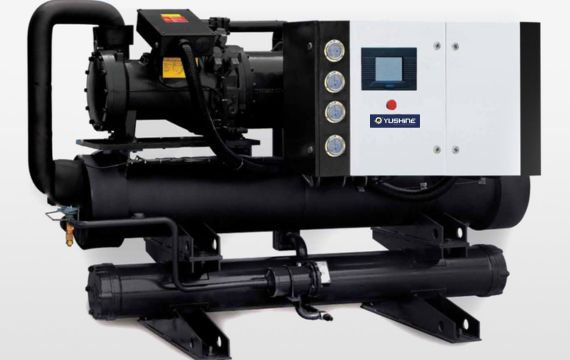
In the refrigeration process of chiller units, the working principle of the compressor is as follows:
The compressor works in a vapor compression cycle, mainly containing four processes: evaporation, compression, condensation, and throttling. First, the low-temperature and low-pressure refrigerant enter the evaporator to absorb heat and evaporate into low-temperature and low-pressure gas to reduce the temperature of cooling water and achieve the purpose of cooling. Then, the gas enters the compressor, which is compressed to high temperature and high-pressure gas. Next, the high-temperature and high-pressure steam enters the condenser to exchange heat, release heat, cool down, and condense into high-pressure liquid. Then, the high-pressure liquid flows through the throttling device(such as the expansion valve), throttled depressurization, turns into a temperature and low-pressure gas-liquid mixture, and enters the evaporator, completing a cycle. In this cycle, the compressor is used in the compression process, connecting the evaporation and condensation processes to achieve the refrigeration purpose of the chiller unit.
The basic working principle of a compressor is to use mechanical energy to compress low-pressure gas into high-pressure gas(by reducing the working volume or increasing the kinetic energy of gas)to realize the circulation and energy transformation of refrigerant in the chiller, achieving the purpose of refrigeration. The working process of the compressor can be divided into three stages: suction, compression, and discharge.
- In the suction stage, the compressor sucks low-temperature and low-pressure refrigerant gas into the compression chamber through the intake valve. At this stage, the gas temperature will rise slightly, but it will still be cool overall.
- In the compression stage, the compressor compresses the inhaled refrigerant, reducing its volume and increasing the gas’s temperature and pressure.
- In the discharge stage, the high-temperature and high-pressure gas is discharged from the compressor through the exhaust valve and into the condenser. By contacting the external air or water, the refrigerant gas releases a large amount of heat, causing its temperature to drop and transforming it into a high-pressure liquid.
- Such a process is carried out in a cycle, continuously compressing and transporting gas, promoting refrigerant circulation, and providing the chiller’s refrigerating effect.
To ensure the compressor works efficiently in the suction, compression, and discharge processes, it is necessary to reasonably select the compressor materials, design the compressor according to the working principle and structure characteristics, and consider the refrigerant properties, system arrangement, and operating conditions. According to the working principle of the compressor and the character of its structure, compressors can be divided into many types, such as scroll compressors, screw compressors, piston compressors, centrifugal compressors, and rotary compressors. Different types of compressors have their advantages and application scope. The following is an introduction to them in detail and an analysis of the advantages and disadvantages of other compressors.
What Types of Compressors Are There, and How Are They Differentiated?
Each compressor has its advantages and disadvantages. Large refrigeration systems are mainly equipped with screw and centrifugal compressors, while small and medium-sized refrigeration systems generally use scroll, piston, and rotary compressors.

Scroll Compressor
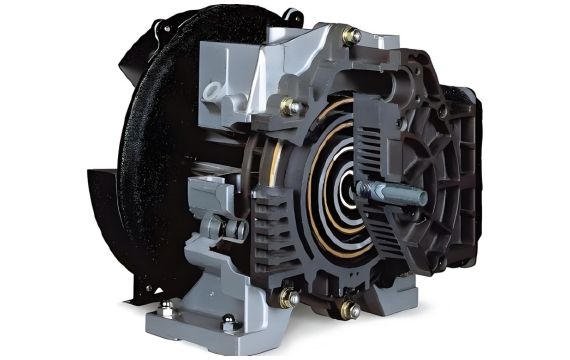
A scroll compressor (also known as a spiral compressor) relies on the relative orbital motion of a pair of fixed and orbiting scrolls to compress gas within a sealed volume continuously. Scroll compressors have a compact structure, requiring only two components – the orbiting scroll and the fixed scroll, to achieve gas compression. They are energy-saving, with the separation design of gas suction and compression, reducing the transfer of heat and enhancing compression efficiency. They have continuous, smooth compression processes and advantages such as slight vibration, few components, little friction, long service life, and a wide range of applications. They are used in chiller, commercial, and residential air conditioning.
Screw Compressor
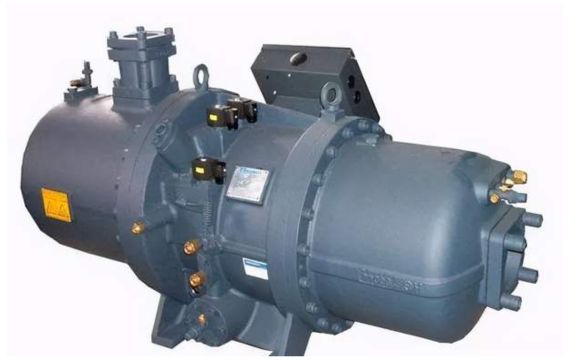
Screw compressors use the rotation of two intermeshing screw rotors to compress the refrigerant. The refrigerant gas is expelled through the discharge port after compression in the screw groove. Screw compressors have advantages, such as solid refrigeration capacity, low vibration and noise, and high reliability. They are mainly used in large commercial and industrial refrigeration. They can be used as single units or in single or multiple combinations according to the actual scene and refrigeration tonnage. They can automatically regulate the operating status according to load changes, effectively increasing the service life of the chiller units.
Piston Compressor
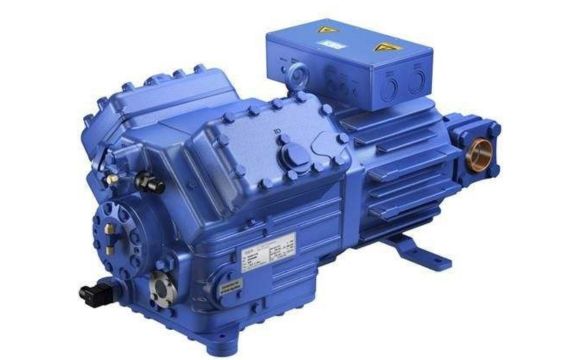
A piston compressor compresses gas through the reciprocating motion of a piston. The main parts are the cylinder, piston, intake and exhaust valves, crankshaft, and connecting rod. Reciprocating compressors are adaptable with a wide range of pressures and have high thermal efficiency, making them suitable for small to medium refrigeration needs and one of the most commonly used compressor types.
Centrifugal Compressor
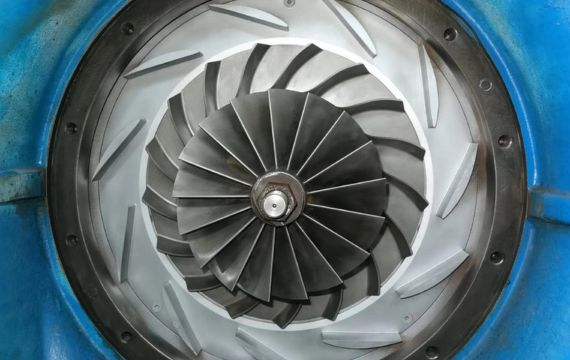
A centrifugal compressor is a dynamic compressor that uses a rotating high-speed impeller to accelerate the gas, changing the direction of gas flow and increasing gas kinetic energy. Then, gas enters the diffuser to slow the flow and convert kinetic energy into pressure energy, increasing gas pressure and repeatedly cycling to compress the set pressure. Centrifugal compressors can handle large volumes of gas and have a simple structure and oil-free lubrication. They are widely used in extensive industrial refrigeration and central air conditioning systems where large gas flow and high compression efficiency are required.
Rotary Compressor
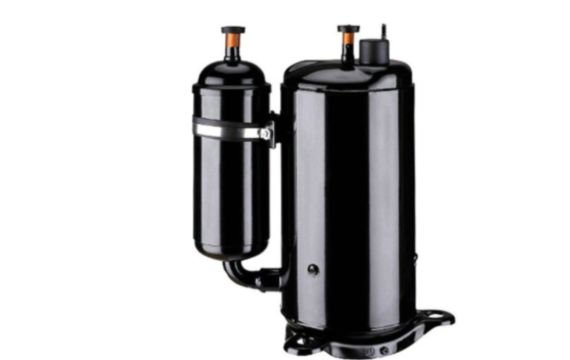
A rotary compressor compresses gas by rotating an eccentric rotor in a cylinder. Blades on the rotor form the sealed compression chamber(compression cavity) with the cylinder wall. The volume of the compression chamber decreases with rotation, attaining the goal of gas compression. Rotary compressors have the advantages of compact structure, lightweight, high efficiency, and high reliability, and they are suitable for residential and small commercial refrigeration systems.
In addition, according to the structure, compressors can be divided into open, semi-hermetic, and hermetic compressors. For industrial chillers, fully hermetic compressors are generally used for chillers whose chilled water is above 0°C, and semi-hermetic compressors are used for low-temperature chillers whose chilled water is below 0°C. Our company produces industrial chillers of air-cooled type, water-cooled type, and screw type, and the semi-hermetic compressors are generally utilized in our large screw chillers.
How to Choose the Right Compressor for Your Needs
Compressor efficiency and displacement relate directly to the efficiency and displacement of chiller units. High energy efficiency ratios and high displacement compressors can help improve chiller units’ energy efficiency and cooling capacity; adjusting compressor operational parameters can control the cooling output and other essential functions. Furthermore, compressors also influence chiller reliability, operational temperature range, refrigerant compatibility, etc.
So, when selecting compressors, choosing models that meet the demands and work reliably and consistently for the long term is essential, preferably from famous brands with guaranteed quality. Copeland, Bitzer, Danfoss, and Hitachi are great and reliable brands in the high-end compressor market. In recent years, some Chinese brands, such as Hanbell, Midea, and Gree, have made significant progress in technology and quality, becoming cost-effective options with relatively lower prices, high efficiency, and reliability. In the mid-range sector, some brands, like Panasonic, Daikin, and Sanyo, have advantages in specific fields, such as small to medium-sized commercial air conditioning and industrial chillers.

Our company’s chiller units primarily use scroll compressors from brands like Copeland and Panasonic, representing the large refrigeration-type chiller units, screw compressors from Hanbell. These renowned brands ensure the stable performance of our chillers. If you are interested in chiller products, you can inquire about pricing!

