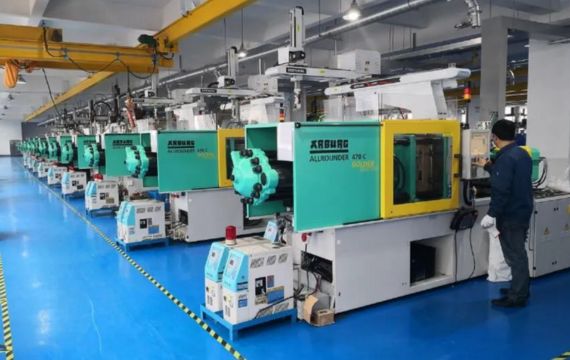
(1)Definition
The mould used to make plastic products is called a plastic mould. To produce plastic products with specific sizes, shapes, and properties, thermosetting plastic or thermoplastic is heated to a particular temperature and placed into a moulded cavity, which remains unremoved after it cools. This process is called plastic-forming technology.
(2)Type of Plastic Forming Technology
Plastic forming technology is mainly classified into compression forming, transformation, and injection forming according to the moulding method. Moreover, there is hollow blow moulding, foaming formin, and pourinforming.
(3)Plastic Mould and Its Basic Structure
Plastic forming technology classifies plastic moulds into compression moulds, transfer moulds, injection moulds, hollow blow moulds, foaming moulds, and pouring moulds.
There are many types of plastic mould, but it consists only of two main types: forming and structure parts. Now, it explains the basic structure of plastic mould with two examples of typical structures.
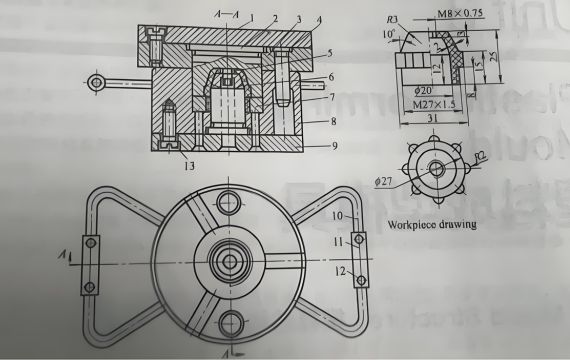
1-Clamping s plate of upper half 2-Crit r plate 3–Cavity retainer plate 4-Guide post 5–Threadec core螺纹型芯; 6-Core 7–Threaded rig cavity 8-Bolster 9-Clamping plate of lower half 10-Hand shank 11-Drivepipe 12-Pin 13-Screw

(4)Choice of Plastic Mould Parting Line
The chosen parting line must be correct for the structure of the plastic mould.
The basic form of the parting line
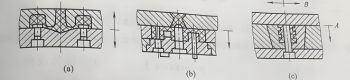
Expressive methods of parting line

Various Forms of Parting Line
2. General Principle of Choicing Parting Line
a.Parting Line Must be Easy to Demould
b.Choicing the Parting line Must Favour Partiung and Core-Pulling
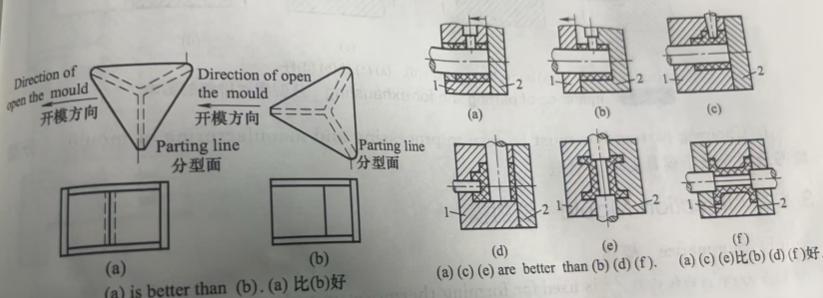
c. Choosing a parting line must guarantee the quality of plastic products.
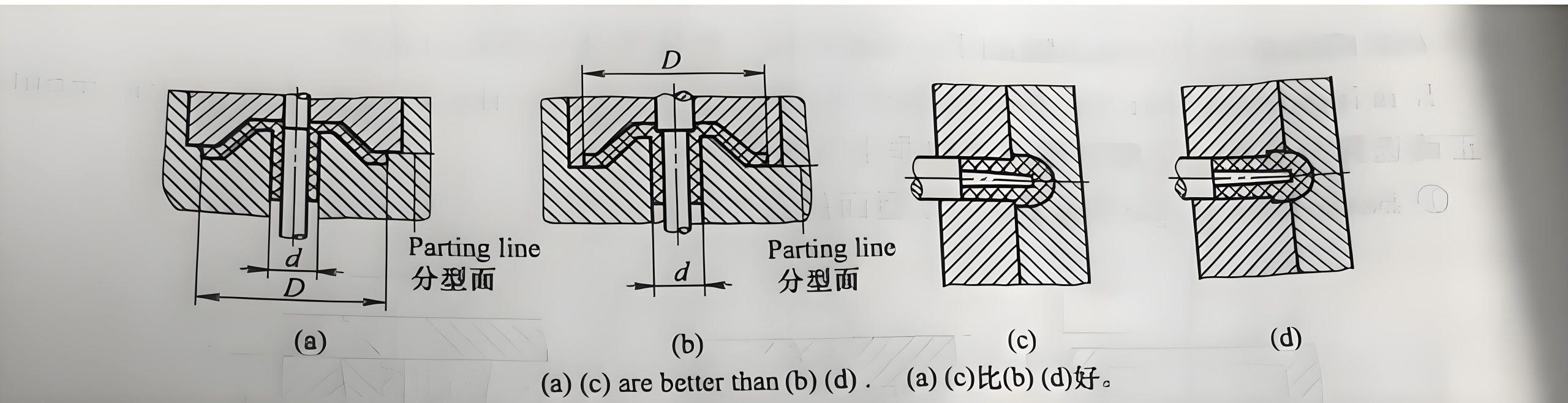
d.Choicing Parting line must Favour Preventing Flash
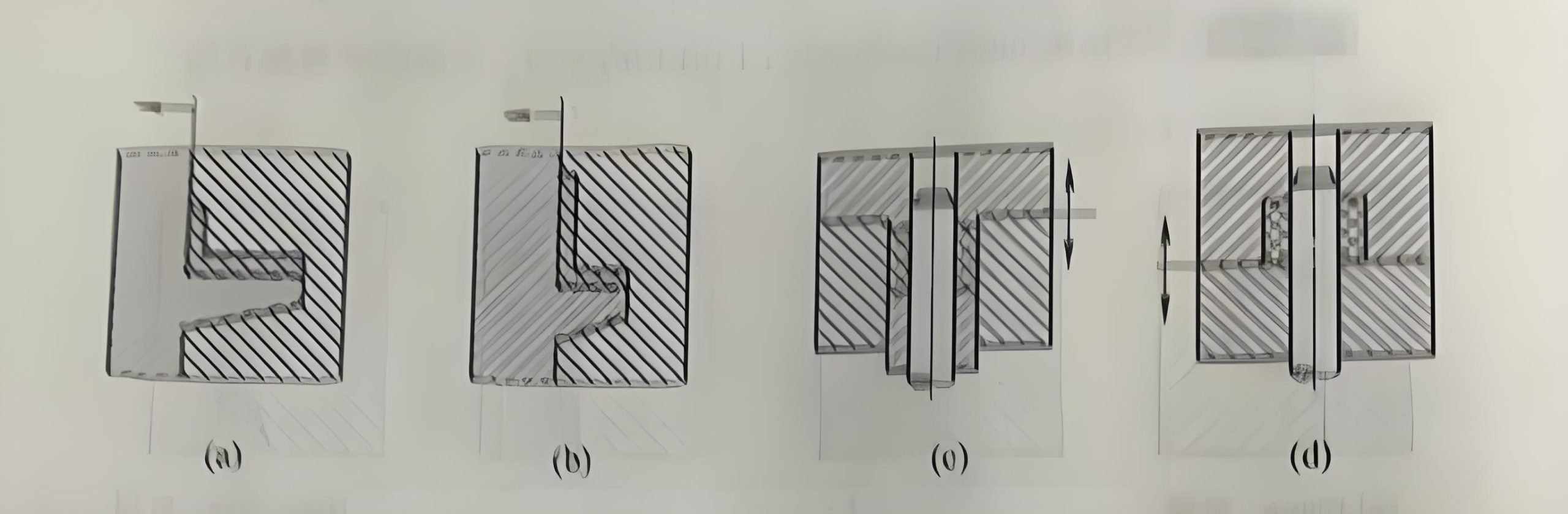
e.Choicing Parting Line Must Favour Exhaust
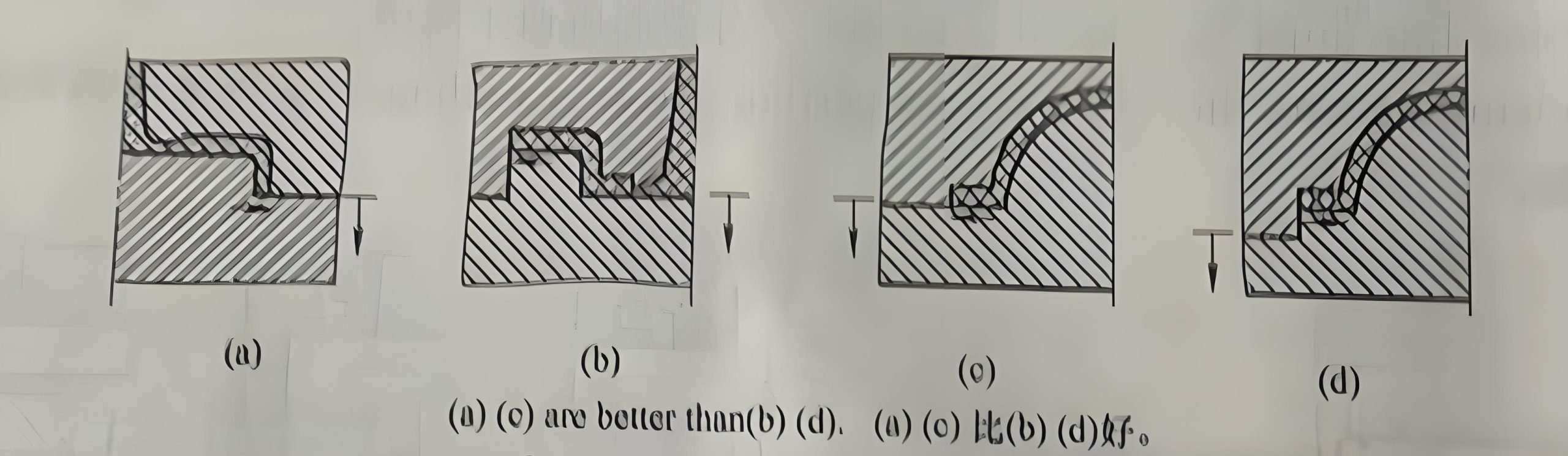
f.Choicing parting line must be easy for the process and manufacturing of mould.