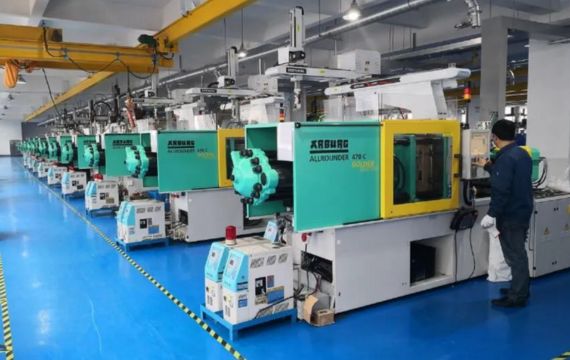
Definition of injection mold:
An injection mold is a mold used for plastic injection molding. It can produce plastic products with complex shapes and precise dimensions or insert them in a single step.
Classification of injection molds:
By molding method:
(1) Injection mold: An injection mold is used on an injection molding machine. It is mainly used for molding thermoplastic materials, and a few thermosetting plastics suit this mold.
(2) Compression mold: A mold used on a hydraulic press that employs the compression process to mold plastic parts. It is mainly used for molding thermosetting plastics.
(3) Transfer mold: A mold used on a hydraulic press employing the transfer molding process for plastic parts. It is suitable for molding thermosetting plastics.
Classification by the number of cavities:

(1) Single-cavity mold: A mold with only one cavity, forming one plastic part per cycle.
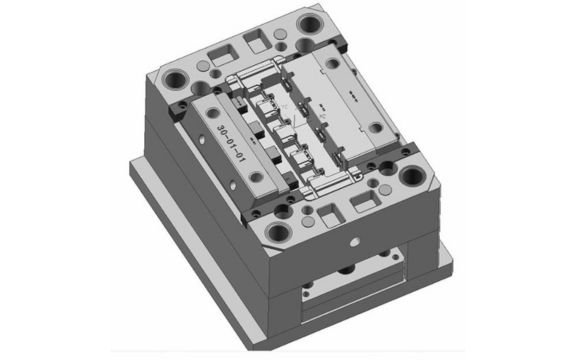
(2) Multi-cavity mold: A mold with two or more cavities capable of molding multiple plastic parts in one go.


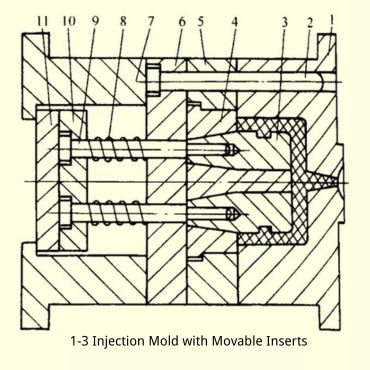

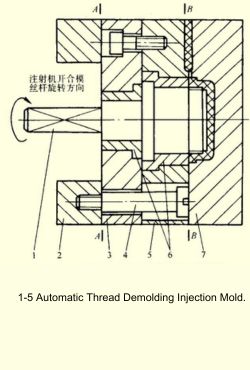
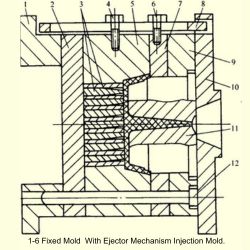
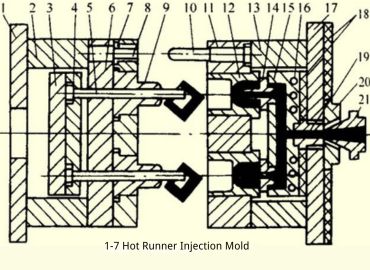
The basic structure of injection molds is generally divided into the following parts:
(1) Molding parts:
Core and cavity (both an integral or an assembled structure).
(2) Gating system:
Channels that direct the molten material from the injection molding machine’s nozzle to the cavities, consisting of the leading runner, sub-runner, gate, and cold slug well. The structure and size directly impact the quality of the molded parts.
(3) Guidance system:
- Overall movement and fixed mold guidance: provided by guide posts or conical blocks on the mold frame.
- Ejection mechanism guidance: provided by guide posts and bushings on the ejector plate.
- Lateral parting core-pulling mechanism guidance is provided by slider rails.
(4) Ejection system:
Ejects the product, consisting of ejector pins (ejector tubes, push plates), retainer plates, leading runner pull rods, and reset rods.
(5) Temperature control system:
Cooling water channels, temperature controllers.
(6) Venting system:
Methods:
(1) Using the parting surface for venting.
(2) Using the fit gap of assembled parts for venting.
(3) Creating vent grooves.