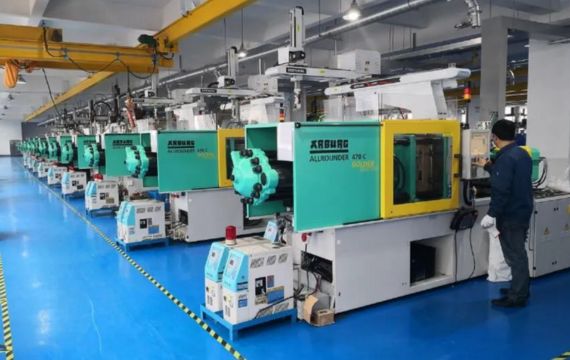
Injection molds are tools used to produce plastic products. Before designing a mold, it is essential to understand and master the properties of plastics thoroughly. Only by being thoroughly familiar with the forming process of plastics can the dimensions of the mold and plastic products be accurately controlled, ensuring the design of high-quality molds.
1.1 Plastics and Their Advantages and Disadvantages
1.1.1 What is Plastic?
According to the national standard (GB/T2035-2008), plastic is defined as a polymeric, artificial material primarily composed of synthetic organic resins, with or without the addition of other compounding materials (additives). It can typically be molded into products with a specific shape under conditions of heat and pressure, and this shape remains unchanged at room temperature.
Some resins, such as polyethylene, polystyrene, and nylon, can be directly used as plastics. However, most resins, such as phenolic Resin, amino Resin, and polyvinyl chloride, require the addition of certain additives before they can be used as plastics.
Plastics have a wide range of applications, and their products exhibit great diversity. There are many types of plastics, each with different properties. Plastics can exist in glassy, elastomeric, and viscous flow. They are generally formed using molds, with standard molding methods including injection molding, extrusion molding, blow molding, compression molding, and transfer molding.
1.1.2 Advantages of Plastics
The advantages of plastics include:
1. Easy Processing and Molding, Suitable for Fully Automated Mass Production at Low Cost
Plastics can be molded into products even with complex geometric shapes, and their production efficiency far exceeds that of metal processing. Especially for injection-molded plastic products, even very complex items can be produced in a single step.
Due to the ease of processing and the capability for mass production with relatively low equipment costs, plastic products are cost-effective.
2. Customizable Colors and Transparent Products
Plastics can be easily colored to create vibrant, colorful, or transparent products. By blending different plastics, products with a pearlescent effect can also be made, significantly enhancing their added value and giving them a fresh, bright appearance.
3. Lightweight with High Specific Strength
Most plastics have a density comparable to water, approximately 1.0 g/cm3. Compared to metals and ceramics, they are lightweight. Although the mechanical strength of plastics is not as high as that of metals or ceramics, their specific strength (strength-to-density ratio) is relatively high, enabling the production of lightweight, high-strength products. Furthermore, filling plastics with glass fibers can significantly enhance their strength and wear resistance.
4. Rustproof and Corrosion-Resistant
Plastics do not rust like metals or corrode when exposed to chemicals. They are resistant to acids, alkalis, salts, oils, chemicals, humidity, and mold, making them highly durable in various environments.
5. Low Thermal Conductivity and Excellent Insulation
Plastics have a high specific heat capacity and low thermal conductivity, making them poor heat conductors. As a result, they provide excellent thermal insulation and heat retention.
6. Suitable for Conductive and Insulating Applications
Plastics are inherently good insulating materials. There is virtually no electrical component today that does not use plastics. By filling plastics with metal powders or fragments, conductive products with excellent performance can also be manufactured.
7. Superior Shock Absorption, Noise Reduction, and Light Transmission
Plastics have excellent shock absorption and noise reduction properties. Transparent plastics (e.g., PMMA, PS, PC) can produce precise products such as lenses, signage, and covers.
1.1.3 Disadvantages of Plastics
The disadvantages of plastics include:
1. Poor Heat Resistance and Flammability: plastics’ most significant drawbacks. Compared to metals and ceramics, their heat resistance is much lower; they deform at slightly higher temperatures and are prone to burning. Most plastics can produce heat, smoke, and toxic gases when burning. Even thermosetting resins will emit smoke and start to flake when exceeding 200°C.
2.Properties Change with Temperature VariationsNot only at high temperatures but even at low temperatures, various properties of plastics can change.
3. Low Mechanical Strength Compared to metals of the same volume, plastics have much lower mechanical strength. This difference is especially evident in thin-walled plastic products.
4. Susceptible to Corrosion by Specific Solvents and Chemicals Generally, chemicals do not easily corrode plastics. However, some plastics, such as PC (polycarbonate), ABS, and PS (polystyrene), are easily eroded by specific solvents and chemicals and have feeble resistance. In general, thermosetting resins perform better and are less prone to corrosion.
5. Poor Weather Resistance and Aging Plastics are not durable in strength, surface gloss, or transparency and exhibit creep under load. Additionally, all plastics are susceptible to exposure to ultraviolet and sunlight and quickly age under light, oxygen, heat, water, and atmospheric conditions.
6. Easily Damaged and Prone to Dust and Dirt Contamination Plastics have relatively low surface hardness and are easily damaged. Furthermore, being insulators, they carry static electricity, making them prone to attracting dust.
7 . Poor Dimensional Stability Compared to metals, plastics have a high shrinkage rate and are easily affected by injection molding process parameters. This results in significant fluctuations that are difficult to control, reducing the dimensional accuracy of molded plastic products. Additionally, plastic products can absorb moisture during use, and when temperature changes occur, their dimensions are prone to change over time.
1.2 Composition of Plastics
The main component of plastics is a variety of resins, which are polymers. However, plastics and polymers are not the same. Pure polymers often cannot meet processing, molding, and practical use requirements. They are generally not used alone but acquire industrial value only when additives are incorporated. Plastics combine synthetic ReResinith with various additives (auxiliary agents) as the primary component. Synthetic ReResinetermines are the fundamental properties of plastic products. Its role is to bind the different additives into a cohesive whole. Additives are incorporated to improve the plastic’s processing and molding performance, enhance the properties of the final product, or reduce production costs.
Plastic materials contain many additives, such as fillers, plasticizers, colorants, stabilizers, curing agents, and antioxidants. While RResin plays a decisive role in plastics’ performance, the contribution of additives cannot be overlooked. Together, they form the complete material system used in plastics.
1.2.1 Resinesin is a polymer that softens when heated and tends to flow under the influence of external forces. It is the most critical component of plastics and acts as a binder, also called an adhesive material. Resin determines the type and basic properties of the plastic, including thermal, physical, chemical, mechanical, and electrical properties.
1.2.2 Additives
(1) Fillers
Fillers, also known as reinforcing agents, are essential components in plastics, though not indispensable for every type. They are typically inert, powdery substances. Fillers are added to plastics to improve molding and processing performance, enhance specific product properties, impart new properties, and reduce costs.
For example, adding wood powder to phenolic ReResine reduces brittleness and costs. Calcium fillers added to polyethylene and polyvinyl chloride resins create rigid, heat-resistant, low-cost calcium-based plastics. Glass fiber as a filler dramatically enhances the mechanical properties of plastics. Certain fillers can even provide plastics with properties not present in the ReResin, such as conductivity, magnetism, or thermal conductivity.
Fillers can be classified as inorganic or organic and are available in three forms: powdery, fibrous, and flaky. Powdery fillers include wood powder, pulp, marble, talc, mica, asbestos, and graphite. Fibrous fillers include cotton, flax, glass fiber, asbestos fiber, carbon fiber, boron fiber, and metal whiskers. Flaky fillers include paper, cotton, linen, and glass cloth. The filler generally accounts for less than 40% of the total composition of plastics.
Fillers with spherical or cubic shapes typically enhance molding and processing performance but result in lower mechanical strength, whereas flake-shaped fillers have the opposite effect. The finer the filler particles, the more they improve the rigidity, impact resistance, tensile strength, stability, and appearance of plastic products.
(2) Plasticizers
Plasticizers are low-volatility, high-boiling organic compounds compatible with resins. They increase plasticity and flexibility, improve molding performance, and reduce rigidity and brittleness. They reduce the intermolecular forces within polymers, making resin molecules more mobile and allowing plastics to become more flexible and pliable at lower temperatures.
For example, adding dibutyl phthalate to polyvinyl chloride resin transforms it into a soft, rubber-like plastic. However, while plasticizers improve the molding and processing performance of plastics, they may also decrease specific properties such as stability, dielectric performance, and mechanical strength. Therefore, the amount of plasticizer added should be minimized whenever possible, and many plastics do not require plasticizers.
Requirements for Plasticizers:
- Good compatibility with the ReResinLow volatility, preventing it from leaching out of plastic products.
- Non-toxic, colorless, and odorless.
- Stable under exposure to light and heat.
- Non-hygroscopic.
Commonly used plasticizers include dibutyl phthalate (DBP), dioctyl phthalate (DOP), and camphor.
(3) Colorants
Most synthetic resins are naturally white and semi-transparent or colorless and transparent. Colorants are often added during industrial production to produce plastic products with a variety of desired colors to alter the original color of the RResin and achieve vibrant, aesthetically pleasing products. Some colorants can also enhance the light and heat stability of plastics. For example, coloring natural polyoxymethylene plastic with carbon black can help prevent photoaging.
Colorants are mainly divided into pigments and dyes. Pigments are colorants that do not dissolve in common solvents and require mechanical methods to evenly disperse them into plastics to achieve the desired coloring effect. Pigments can be categorized into organic and inorganic types. Inorganic pigments have excellent thermal and light stability and are relatively inexpensive but have lower coloring strength and higher density (e.g., sodium crimson, sulfur-indoline yellow, pigment blue, carbon black).
Organic pigments have high coloring strength, bright colors, complete color ranges, and lower densities. However, their drawbacks include lower heat resistance, weather resistance, and opacity compared to inorganic pigments (e.g., chrome yellow, chromium oxide, lead powder). Dyes are organic compounds that dissolve in most solvents and can be used to color plastics. They offer advantages such as low density, high coloring strength, and good transparency, but their small molecular structures often result in migration during coloring (e.g., Solvent Blue).
Requirements for Colorants: Colorants should have strong coloring power, good compatibility with resins, and be chemically stable without reacting with other components in the plastic. They must resist degradation and discoloration during molding under varying temperatures and pressures and maintain stability throughout the long-term use of plastic products.
To achieve these requirements and ensure optimal coloration, color masterbatch machines play a crucial role in the plastic coloring process. These machines accurately measure and evenly disperse pigments and dyes, ensuring desired color effects in plastic products. For insoluble pigments, especially inorganic ones, the efficient mixing systems of color masterbatch machines overcome dispersion challenges, achieving uniform coloration. Additionally, their temperature control features protect organic pigments and dyes from degradation and discoloration during high-temperature processing, maintaining the stability and quality of the colored plastic products.
(4) Stabilizers
During processing and usage, resins can undergo aging, also known as degradation. Degradation refers to reactions where the polymer’s molecular chains break, or its chemical structure changes negatively under the influence of heat, force, oxygen, water, light, or radiation. Stabilizers are added to polymers to maintain their chemical properties and prevent degradation or crosslinking caused by external factors like heat, light, oxygen, and mold.
Stabilizers are classified based on their functions, including thermal stabilizers, light stabilizers, and antioxidants:
- Thermal Stabilize inhibits thermal degradation during plastic molding, ensuring smooth processing and high product quality. Organic tin compounds, which are non-toxic but expensive, are commonly used in PVC plastics.
- Light Stabilizers prevent degradation and performance loss in plastics caused by sunlight, artificial light, or high-energy radiation. Common types include ultraviolet absorbers (e.g., benzoic acid esters) and light-blocking agents (e.g., carbon black).
- Antioxidants: These prevent oxidation and degradation in plastics at high temperatures. Phenol-based and amine-based organic compounds are often used as antioxidants.
Most plastics require stabilizers, accounting for 0.3% to 0.5% of the total material. Requirements for Stabilizers: Stabilizers should be compatible with resins, effectively stabilize polymers, and resist water, oil, and chemical corrosion. They must also not degrade during molding, have low volatility, and not impact the plastic’s color.
(5) Curing Agents
Curing agents, hardeners, or crosslinkers are used to mold thermosetting plastics. Linear polymer structures in synthetic resins require crosslinking reactions to transform into a three-dimensional polymer network, and curing agents facilitate these reactions. For example, ethylenediamine and triethanolamine are commonly added to epoxy resins.
Other additives, such as foaming agents, flame retardants, antistatic agents, conductive agents, and magnetic agents, can be incorporated into plastics depending on the requirements. For example, flame retardants reduce the flammability of plastics, foaming agents produce foam plastics, and antistatic agents provide moderate conductivity to eliminate static electricity. The choice of additives and their types depends on the type of plastic and the specific application requirements of the plastic product.