Using a Three-Component Volumetric Proportion Blender for Stable Color Consistency
In toy injection molding, color consistency is a fundamental quality requirement. Even minor shade differences can result in rejected parts or customer complaints. Many factories experience the same issue: the recipe and masterbatch remain unchanged, yet color variation still occurs during production. In most cases, the cause is not the masterbatch quality, but how virgin material, regrind, and color are proportioned and fed into the machine.
When Regrind Is Introduced, Color Dosing Must Be Handled Differently
Conventional color dosing systems are designed for stable material flow, which is typically the case with 100% virgin material. Once regrind is added, material behavior changes. Flow becomes less consistent, and short interruptions or bridging are common. When this happens, the main material flow fluctuates, while the masterbatch feeder continues dosing at a fixed rate. Even minor, repeated mismatches can cause visible color variation over time. This is why production lines using regrind require synchronized material proportioning, rather than simple color dosing.
The Root Cause: Materials Are Not Fed Together
Conventional color dosing systems focus only on whether the color masterbatch is being fed, usually based on injection screw signals. They do not monitor or respond to the actual flow of virgin material and regrind entering the machine. When regrind material temporarily bridges or flows unevenly, the total material throughput changes. However, the masterbatch feeder continues dosing at the same rate, unaware that the main material flow has decreased. This momentary mismatch immediately breaks the intended ratio. To compensate, operators often rely on visual inspection, trial shots, and repeated manual adjustment. Over time, this leads to unstable color results, higher material waste, and inconsistent production quality.
A Better Solution: Three-Component Volumetric Proportion Blending
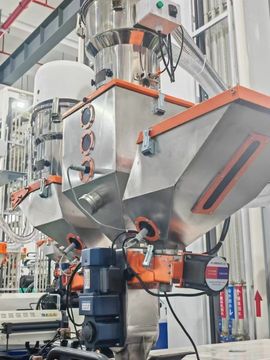
To eliminate color variation caused by unsynchronized material feeding, the key is to control all material components together, rather than adjusting color afterward. Yushine SPM Series Volumetric Proportion Blender addresses this issue by ensuring that virgin material, regrind, and color masterbatch are dosed simultaneously according to preset ratios. Instead of reacting to color deviation after it appears, the system stabilizes the material proportion before the melt enters the injection molding machine.
How Yushine SPM Volumetric Blender Works
The SPM volumetric blender operates on a simple, practical principle: all materials are fed simultaneously in fixed ratios. Virgin material, regrind, and color masterbatch are stored in separate hoppers. Every hopper has its own screw and motor, allowing each material to be dosed accurately and independently.
When the injection molding machine calls for material, all dosing units start together. Each component is fed according to the preset ratio, and the materials are combined as they are discharged. Because dosing and mixing occur simultaneously, a separate mixing chamber or a mechanical stirrer is needed. It produces static electricity, dust generation, and color contamination, resulting in a cleaner, more stable mixing process.
Why This Design Is Ideal for Toy Injection Molding
1. All Materials are Fed Together, Every Time
Virgin material, regrind, and color masterbatch are dosed simultaneously. When arterial flow changes, all components change together, maintaining the color ratio.
2. Stable color, even when using regrind
Regrind material often varies in size and flow behavior. By feeding all materials in sync, the system prevents these variations from affecting the final color.
3. Cleaner mixing without mechanical stirring
Traditional mixers can create static electricity, dust, and color specks. The SPM’s mix-while-dosing design eliminates mechanical mixing, resulting in cleaner, more consistent color.
4. Same color across shifts and machines
Once a recipe is set, it can be saved and reused. This makes it easy to reproduce the same color results, regardless of operator or shift.
Typical Model Configuration (SPM-25 Series Example)
The SPM-25 series is widely used in toy injection molding for mixing virgin material, regrind, and color masterbatch.
It is available in 2-, 3-, or 4-component configurations, with the three-component model being the most common choice for toy applications.
Typical output is around 180 kg/hr, making it suitable for standard toy injection molding machines.
The system is designed for standard plastic pellets (3–5 mm) and can be installed directly on the injection molding machine or used as a centralized blending station, depending on the production layout.
Widely Used In
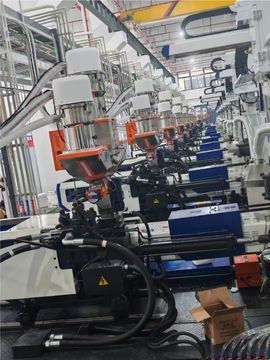
This type of volumetric proportion blender is widely used in production environments where color consistency matters and regrind material is part of everyday operation.
It is commonly applied in toy injection molding, household plastic products, and a wide range of consumer goods.
For parts with visible surfaces—such as home appliance plastic components—stable color is especially important.
The system is also suitable for production lines seeking to increase regrind use without introducing color variation.
In addition to injection molding, the same proportioning principle is also used in blow molding and extrusion processes.
Conclusion: Color Stability Starts with the System
Color variation in toy injection molding is not random, and it is rarely caused by the masterbatch itself.
In most cases, it happens because materials are not fed in sync.
When virgin material, regrind, and color masterbatch are proportioned together in real time, color control becomes stable and predictable.
The SPM three-component volumetric blender makes this possible by keeping the material ratio consistent before the melt enters the machine.
For manufacturers seeking better color consistency while increasing regrind use, this approach offers a practical, reliable way to stabilize daily production.
Call to Action
Looking for a stable color mixing solution for your injection molding line? Contact us to discuss your material type, regrind ratio, and production requirements.