
Injection molding workshops and extrusion plastic producers require specialized automation equipment — the Central Feeding System. Central Feeding System ( Centralized Feeding System, Automatic Feeding System). This article aims to introduce the function, cylindricity, and importance of the central feeding system from the following aspects: working principle, components, advantages, and so on.
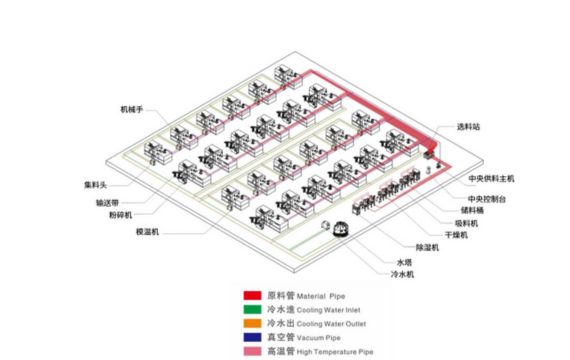
Working Principle
The central feeding system employs vacuum conveying. Stored plastic raw materials are transmitted to a central dehumidifying drying system by a centralized pipeline. Components_Enclosed.doc is then transferred to each injection molding machine using centralized piping. The system is a single-pipe and loop design, unaffected by the plastic’s remoistening and clogging. It coordinates the operation of a central drying machine(dehumidifier). The dried air dries the material again to prevent the plastic from remoistening after drying.
Simultaneously, the system cleans the conveyance pipes every cycle. Under the effect of vacuum negative pressure, materials are conveyed and cleaned, which causes the remoistening Intrinsic of the materials out of a filter( a rotary dust collector system ). =Very much guarantees the plastic material inherent inside the dust with the material. The design of one pipe for one machine ensures air conveyance instead of materials work in a stable regime without remoistening.
Components
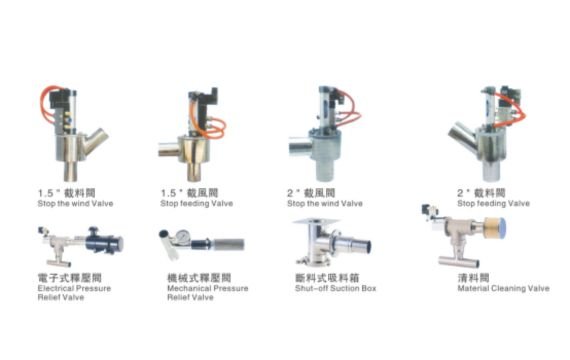
The main components of the central feeding system are the central control station, cyclone dust collector, pulse dust collector, raw material distribution station, storage barrel, mixer, dryer, dehumidifier, weighing mixer, central hopper, crusher, beside-the-press granulator, robotic arm, air shut-off valve, material shut-off valve, and various pipes and ducts.
Advantages
Centralized Dehumidification and Drying
- Electricity Savings: Suppose a customer has 10 injection molding machines using one type of material with 10 separate 100Kg dryers consuming 59.5Kw per hour. If a central feeding system with a single 1000Kg dryer consuming 30Kw per hour is used, it saves 29.5Kw per hour, resulting in annual savings of 259,128Kw.
- Water Savings: A customer using 5 x 100Kg dryers with 5 x 80 dehumidifiers that require cooling water can save nearly four units of cooling water by centralized dehumidification with a single 400 dehumidifier.
- Environmental Improvement: Reduces workshop temperature. For example, 10 x 100 dryers on injection machines release significant heat. Using a central control system to dry and isolate the drying from the injection workshop through sealed pipes, the heat from each dryer can be directed outdoors, reducing the overall workshop temperature.
Centralized Feeding
- Labor Reduction: If a customer has 20 injection machines that require five operators to feed them, a central feeding system could reduce this to one or two operators.
- Cleaner Workshop:
- Material Savings: The fully automated, closed feeding system reduces manual handling and uses storage barrels and bins, reducing material wastage by 2-3% compared to manual operations.
- No Dust Pollution: The materials are transferred to storage barrels and pumped through pipes to the injection machines, minimizing dust contamination during transportation.
Features of the Central Feeding System Equipment:
- The equipment utilizes PLC and a large-sized color touch human-machine interface (HMI). This system does not require specialized personnel and is easy to operate. Various work parameters can be set for automated operation, and user-friendly program controls simplify system maintenance.
- Centralized raw material drying reduces the number of dehumidifying dryers needed, lowering energy consumption and cost. The baking exhaust is isolated from the site, significantly lowering the ambient temperature at the production site, reducing pollution and waste from cleaning, and effectively improving the environmental conditions.
- Centralized raw material storage and management separate the material area from the molding area, ensuring a clear division of work. The molding area does not need to house drying equipment, maximizing space usage and ensuring worker safety.
- A unique centralized dust collection system reduces dust pollution, makes cleaning easier, keeps the workshop clean, and aligns with modern factory images. It also prevents static dust collection issues during post-processing, enhancing product quality.
How to Choose a Central Feeding System:
- Select the system based on production line characteristics. Different industries have varying material types, quantities, and processes, so choosing a central feeding system should consider the production line’s specific needs. Select systems with corrosion resistance and explosion-proof features for lines dealing with dust or hazardous gases to ensure safety and stability.
- Determine the system size based on demand. Choose the scale of the central feeding system based on actual material needs and production line size to avoid oversizing or undersizing. Also, factors like room size, environment, and system maintainability should be considered.
- Choose based on system performance. The performance of the central feeding system directly affects its efficiency and quality. Consider attributes like wear resistance, fatigue resistance, and stability to ensure regular operation and extend its lifespan.
- Consider system scalability. As the production line expands, the material demands of the central feeding system will increase. Therefore, consider its scalability to meet the needs of the production line, allowing for upward or downward expansion as necessary.
In conclusion, selecting the right central feeding system is crucial not only for improving service efficiency and product quality but also for increasing the high automation level of the production line, reducing labor and resources, and ultimately, judging the central feeding system. So, when choosing a central feeding system, all relevant factors should be considered to avoid purchasing those that cannot satisfy the production line’s needs and further the company’s development.
Yushine is a high-tech enterprise specializing in the research and development, design, manufacturing, and service of automated molding auxiliary equipment and systemic solutions in the plastics field. Yushine is committed to creating a complete set of industrial automation solutions in the rubber and plastics field and achieves a high level of design quality. Yushine is positioned in a high-end plastic auxiliary machinery industry, relying on its professional team to design various custom parts and challenging installations.
